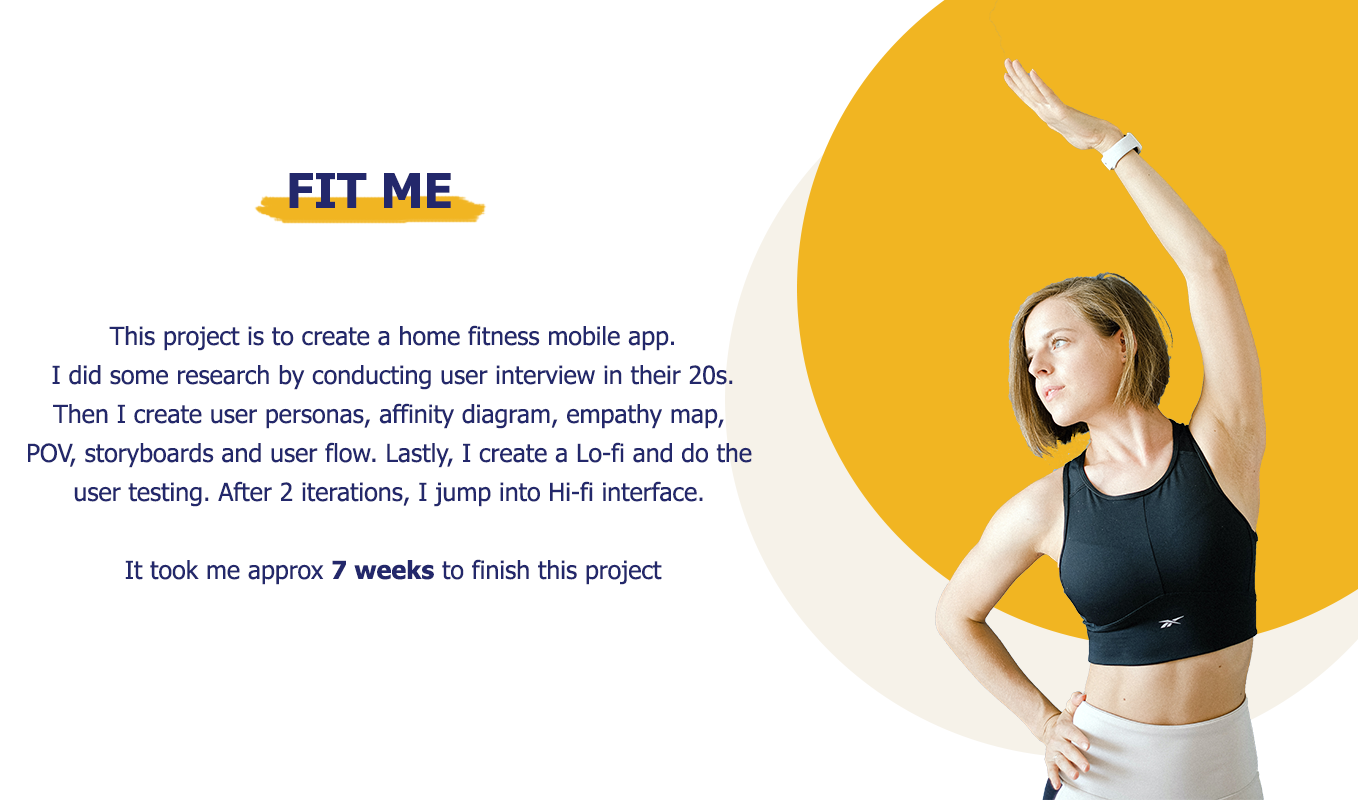
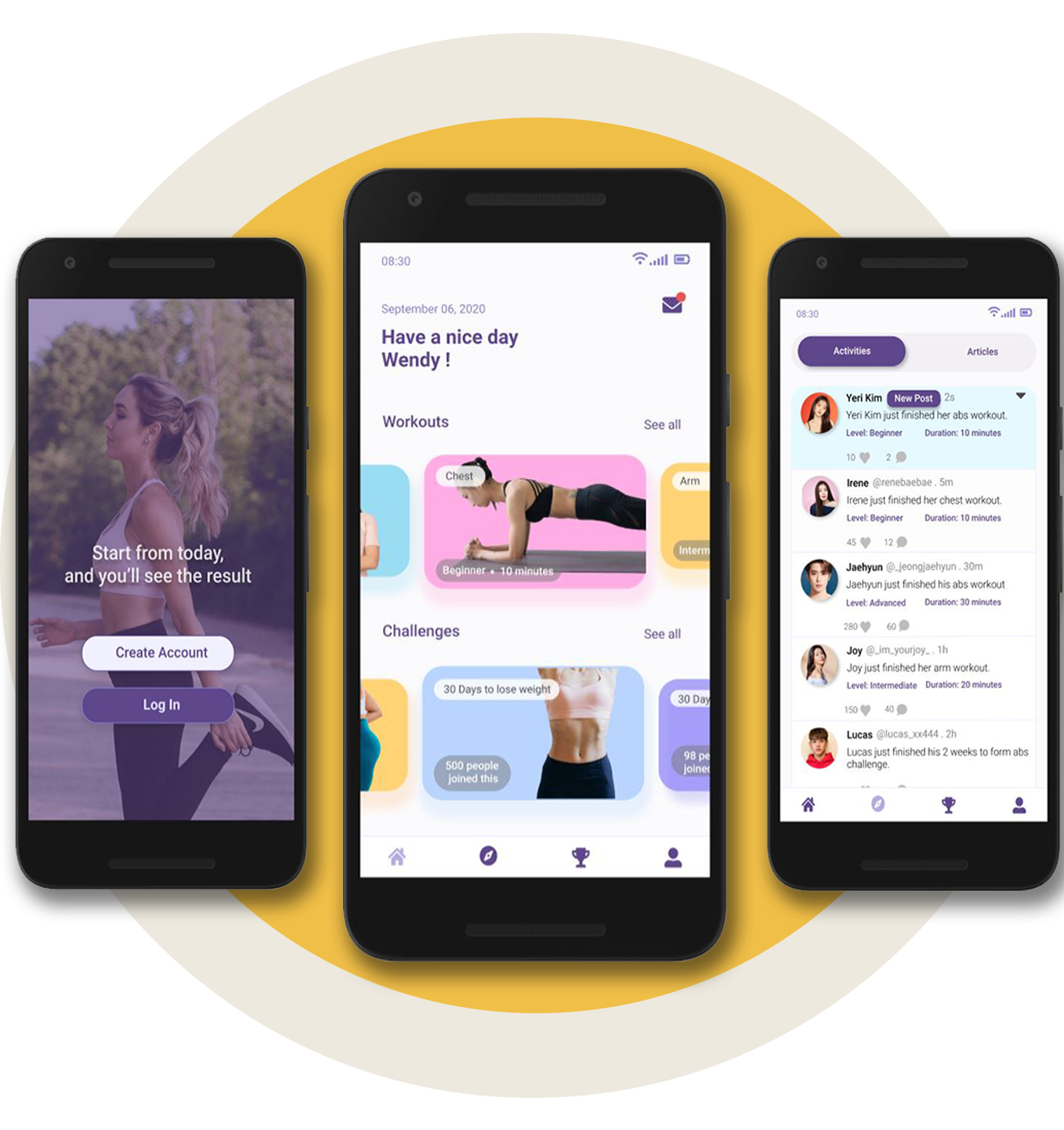
Fit Me is a collaborative and fun home fitness mobile app. This app helps people who want to exercise more, but for various reason they don't get around to it.
My Role:
UI & UX Designer
Goals:
- Design a home fitness mobile apps to help people manage their exercise routine
- Make people stay motivated to exercise more
- Provide an effective, simple and non-time consuming exercise
Constraints:
- limited budget
- limited resources
People want to exercise to keep their body fit and have an ideal body type. But they failed to manage their exercise routine. Exercise regularly is hard to manage for those who lacks of motivations. It's easy for the one who loved to exercise.
01 Busy schedule / lack of time
02 They exercise alone
03 Lack of motivations
Added some features that will improve their intensity of the exercise. Everyone has their own concerns about to start exercise. This app provide several features to make people manage their exercise regularly and keep them stay motivated.
01 Exercise with friends
02 Quick workouts
03 Feeds
04 Leader board
05 Reminder
I used 2 methods in this research, user interview & probes for context mapping. I conducted user interviews with 6 participants (on their 20s) who don't exercise as much as they would like to and also who are smartphone users.
I learned and tried to find out my participant's habits and their motivation to exercise. Most of them tend to start exercise because they want to have a proper body weight, form a muscle and to keep their body fit all the time.
The reasons that prevent them to exercise are they do not have much time because they already exhausted with their busy day, and also they did not get much motivation to achieve their own target.
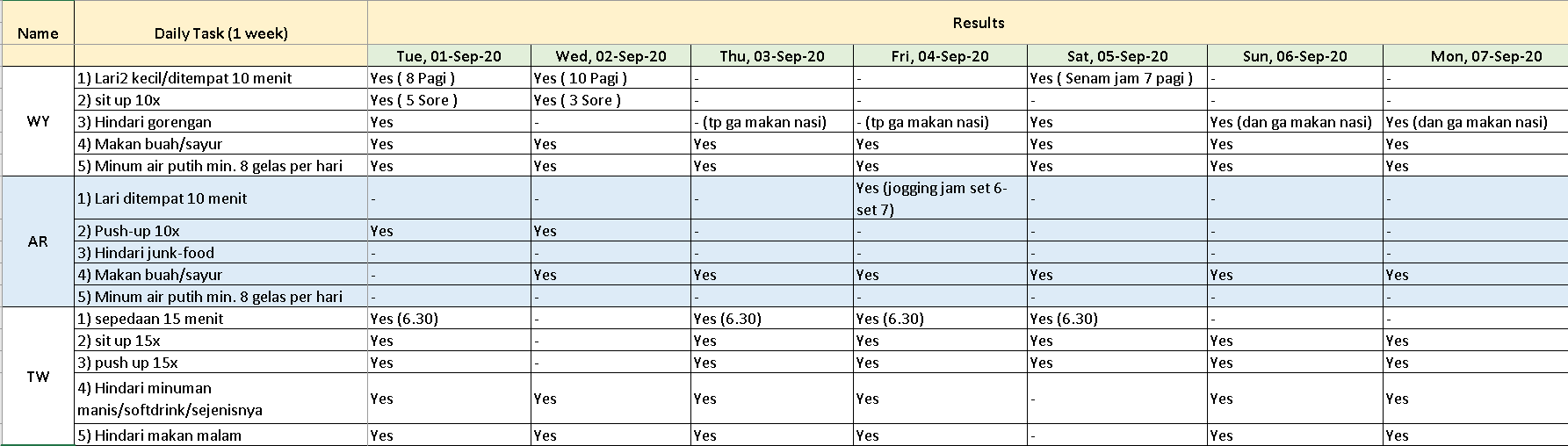
On the probes method, I tried to get my participants to reflect differently on the way they exercise. I give them task for a week based on their interviews. Based on result, most of them had done the exercise while they were working from home. As they started to work from office, they were no longer exercise. There was one person that stopped her exercise at day-3 because she forgot her task.
I collect the information that gathered in the user research. I made a synthesis and developed the understanding about my user's need. Then, I started to create an affinity diagram to analyze and identify the major themes in my data
.jpg)
Affinity diagram provides a clearer overview of the most important themes in the collected data.
I gathered all of the information from user interview and probes. Then, I wrote down the data into sticky notes and put it together into a group based on their similarities. There were 4 group created on the affinity diagram.
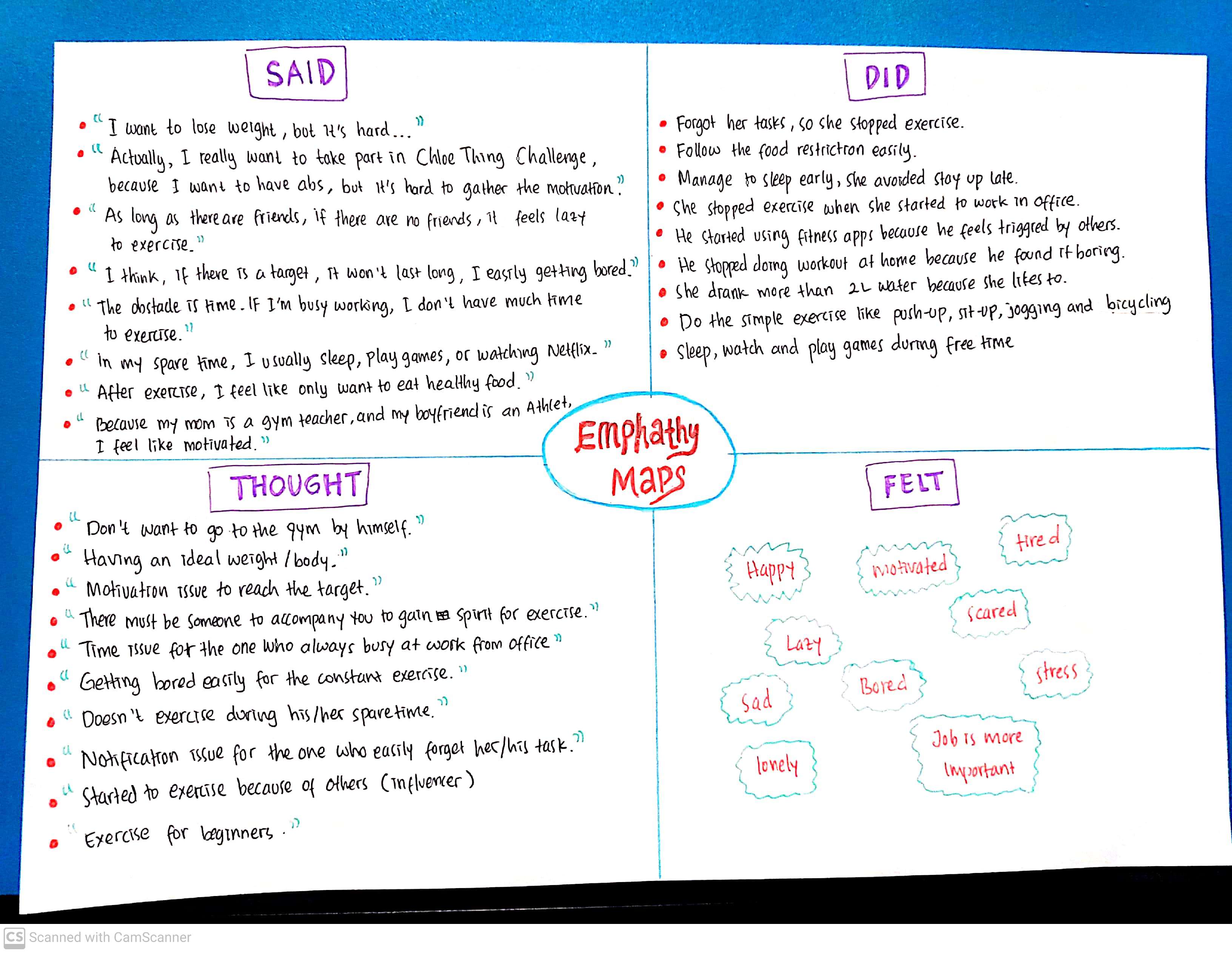
After reviewed each theme in my affinity diagram, I drew an Empathy Map to chart how user's talk, act, think and feel.
I wrote down significant quotes and keywords in the relevant quadrant. I looked at each quadrant and translate it into user needs related to that quadrant.
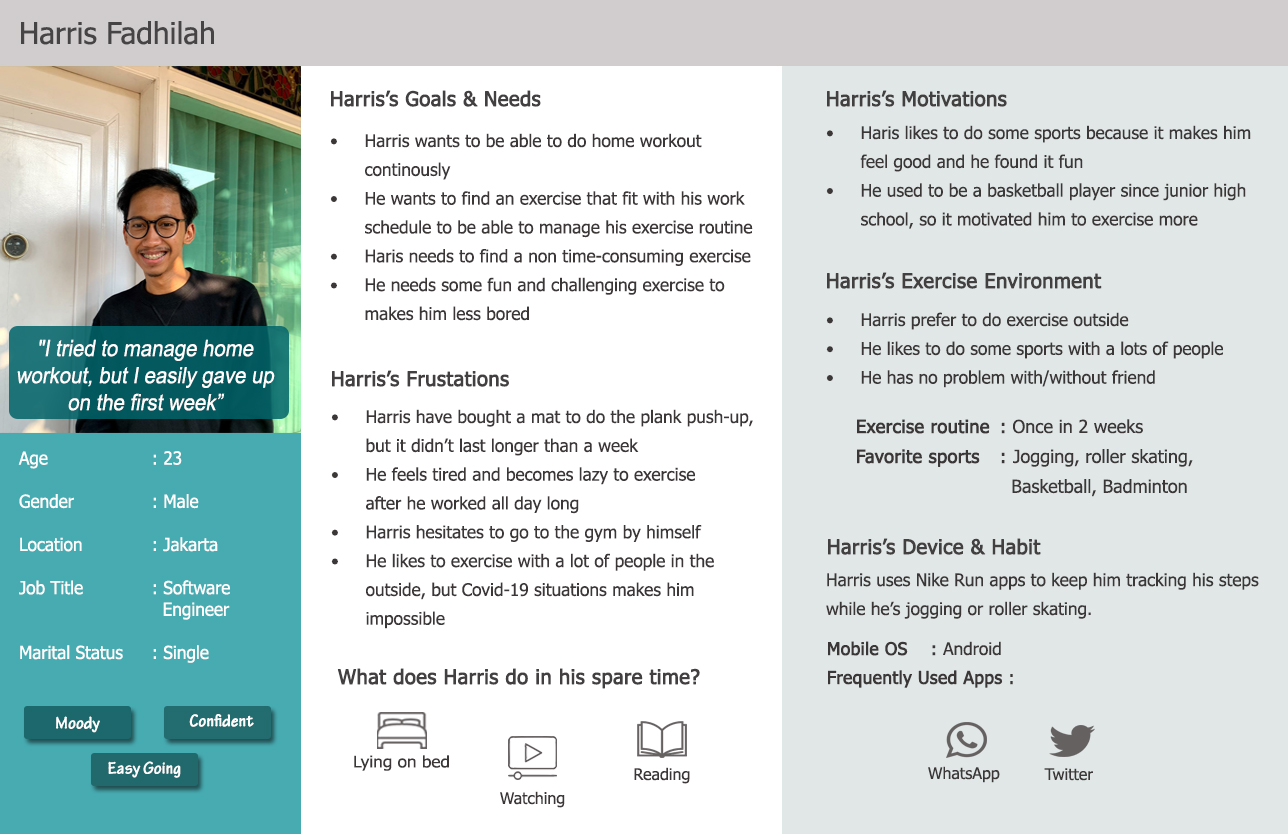
I made user personas to define the type of person that I am designing for. I defined the stories about 3 main characters to gather the major motivations, needs, goals and their pain points. The 3 major user personas represent all the participants on the user research that described in details according to the application which will be formed.
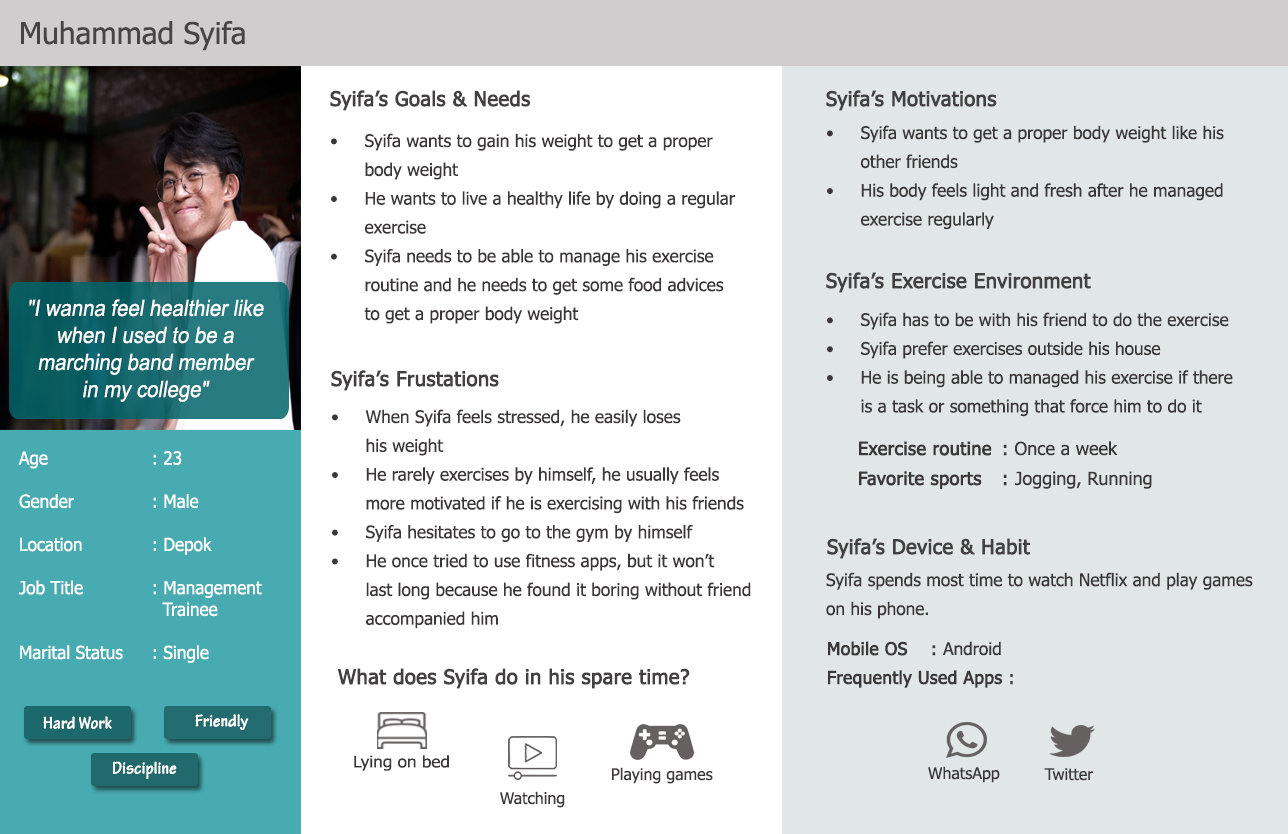
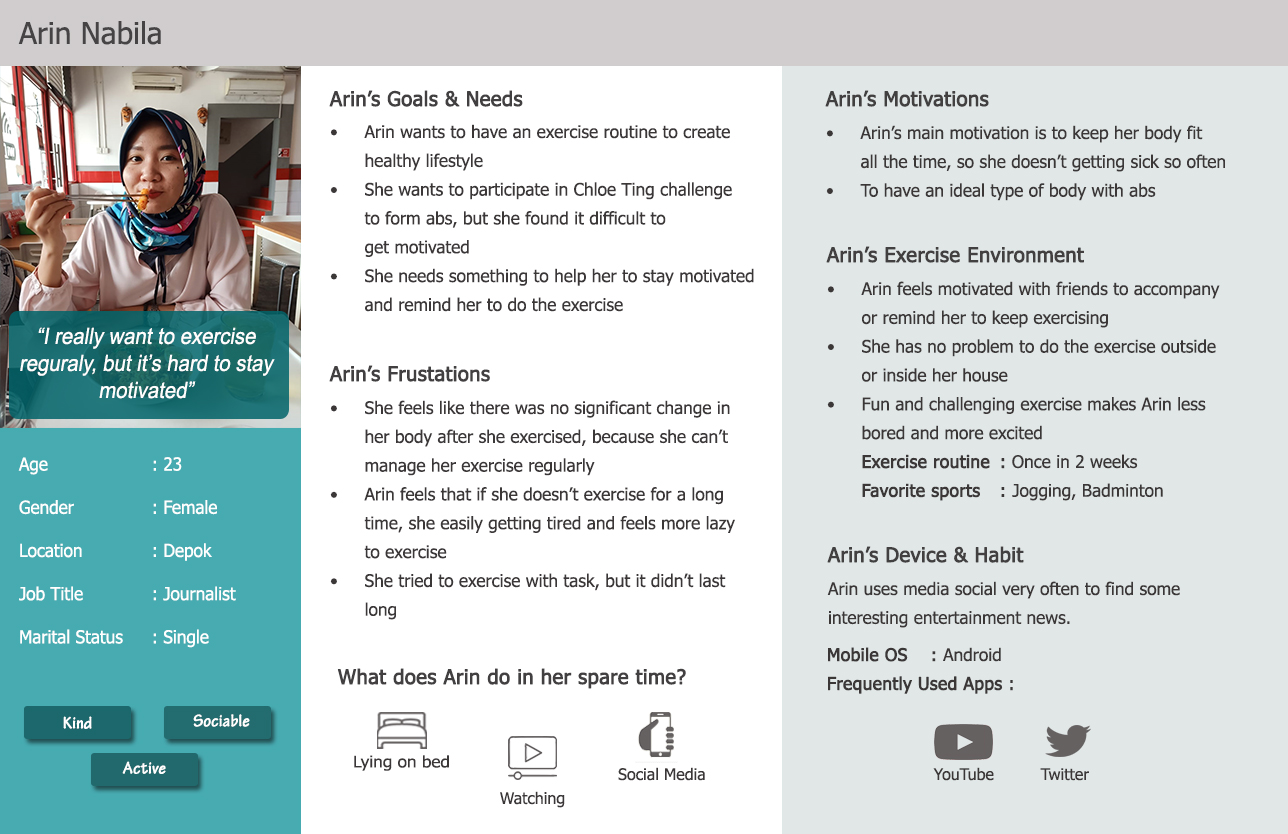
Based on the 3 user personas, I crystallize the user needs to defined a POV (Point of View) by selected 3 key user needs. POV allows me to ideate and solve my design challenges in a goal-oriented manner which keep me focus on users, their needs and my insights about them.
I used my POV to asking a specific question with "How Might We" questions. HMW allows me to opened up ideation sessions where I can explore ideas to help me solve my design challenge and innovative solutions.


Most of users rarely exercise because they do not have much time. They were already tired and exhausted of their busy day and they often had to get stuck in the traffic for an hours.
They feel more motivated when exercise with friends. They feel less bored, can talk to each other and spend time much longer to exercise.
Some people decided to start exercise because they see someone's exercise result. When they see other people's achievement, they feel triggered to try some exercise.
After I faced user's problems, I tried to find the solutions and came out with some features that might be added into this apps, including:
Because most of people feels like they do not have much time to exercise, I tried to figured out a kind of non-time consuming exercise. Then, I came for some quick workouts which is less than 7 minutes with several difficulties.
.gif)
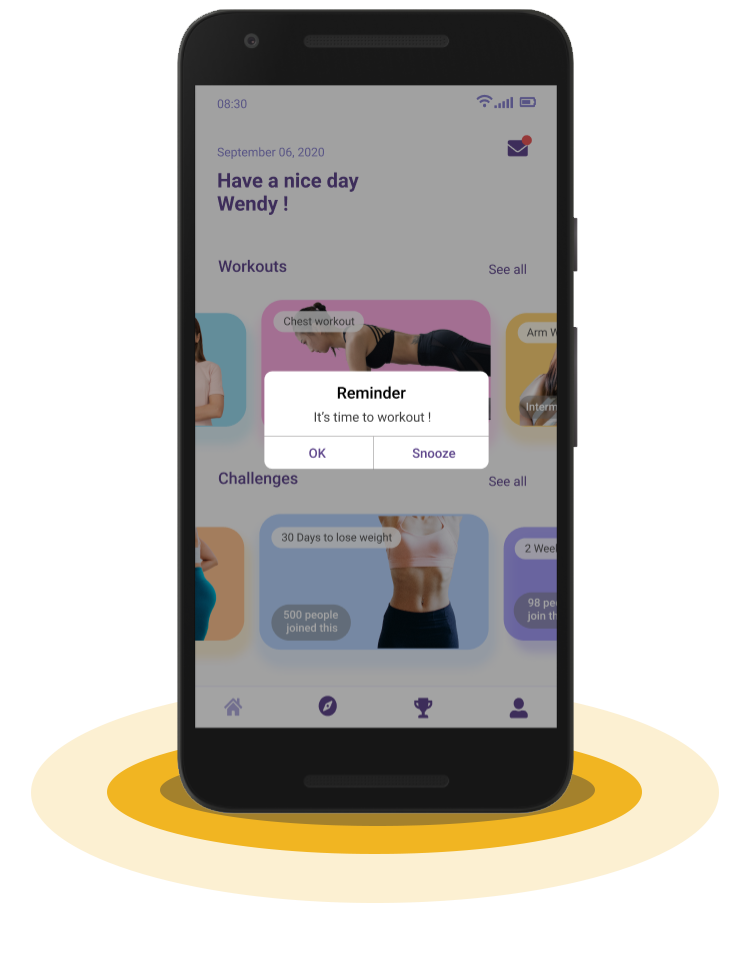
Based on the probes, there was a user who's stopped exercise because she forgot her task. I tried to tackle user problem by giving them a reminder. Set reminder prevents user from forgetting their exercise routine.
Since most of people feel more motivated to exercise with their friends, I came up with an idea to added video call feature while exercising. So, they can invite their friends to do the exercise together.
.gif)
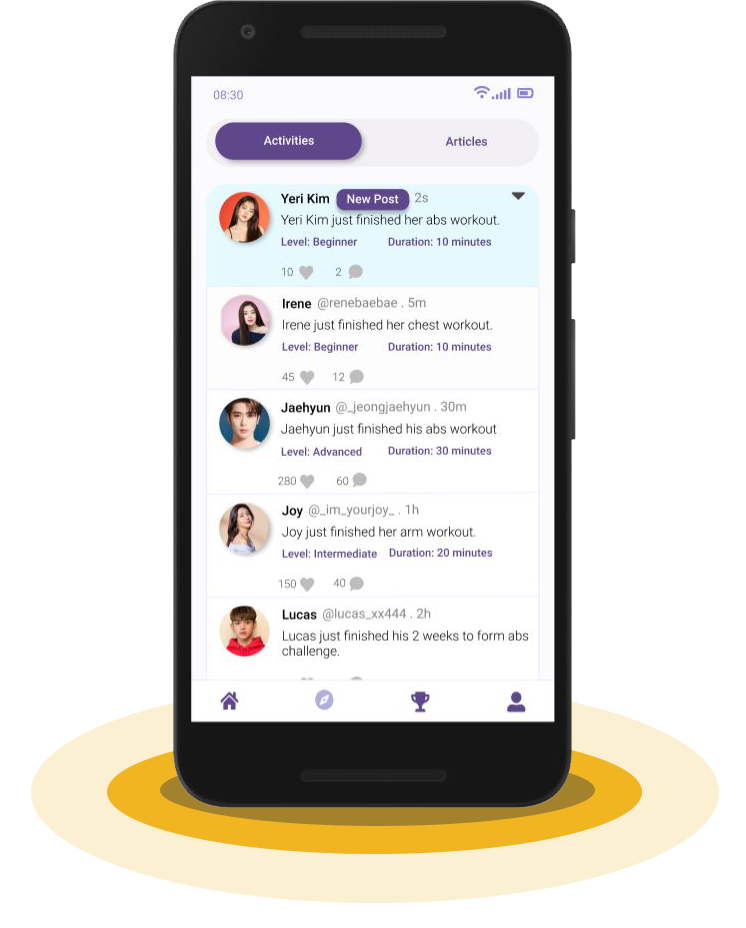
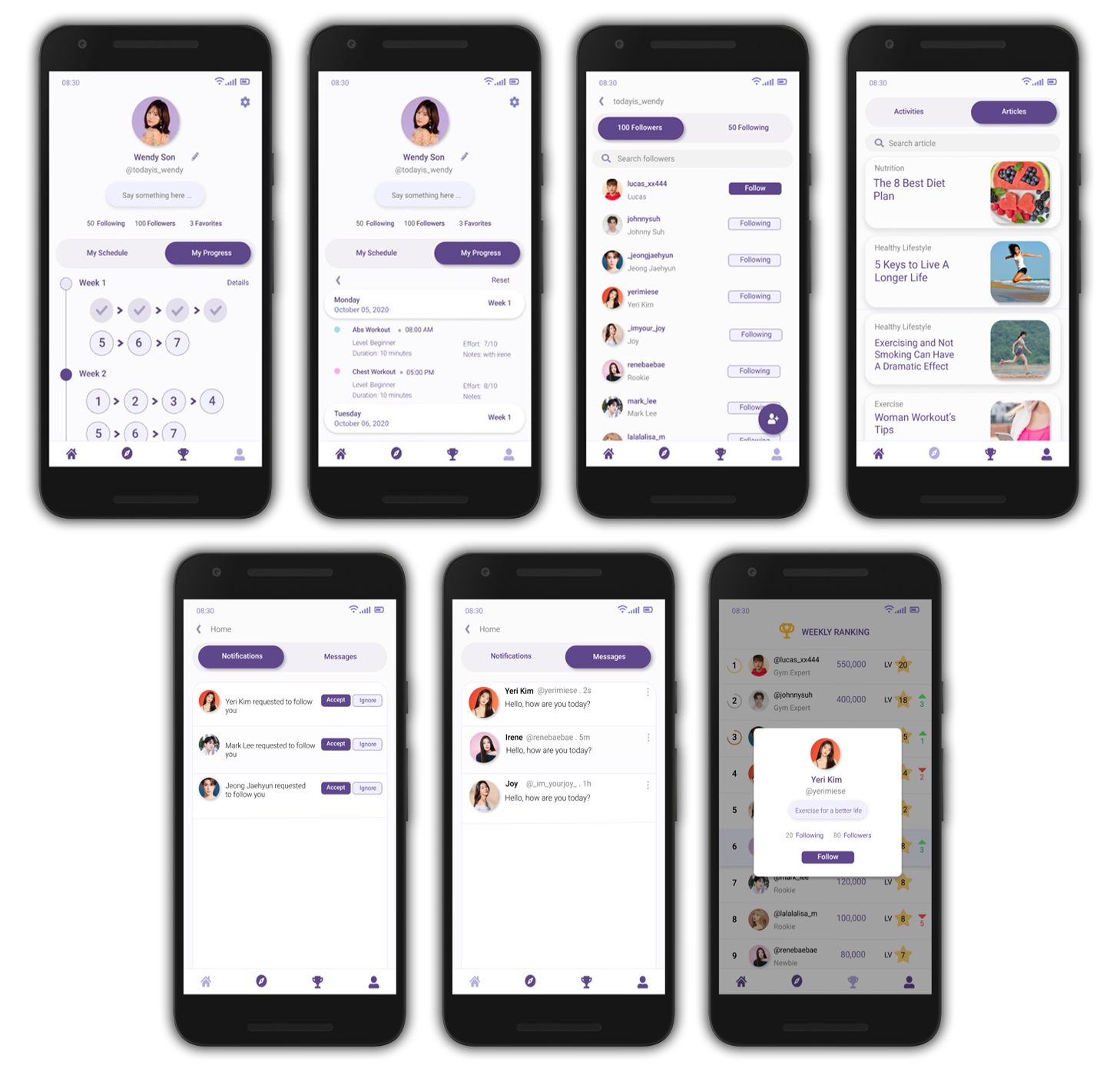
Many users said that they decided to start exercise because of other people. After they see other people's exercise result, they triggered to do the same thing. Feeds feature showing off user's update every time they finish the exercise.
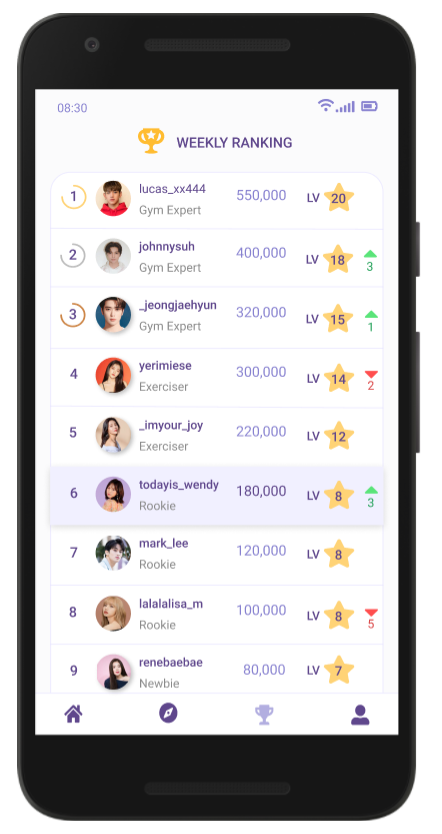
This ranking method also will triggered user to do the exercise more intense. They will compete their rank with other user and show off their achievement.
I started to make a prototype by drew a storyboards, create a user flow, and then I drew the design sketch. After that, I made a Lo-fi prototype and then do the usability testing with 9 participants to get a quick feedback. Lastly, I jump into the Hi-fi interface.
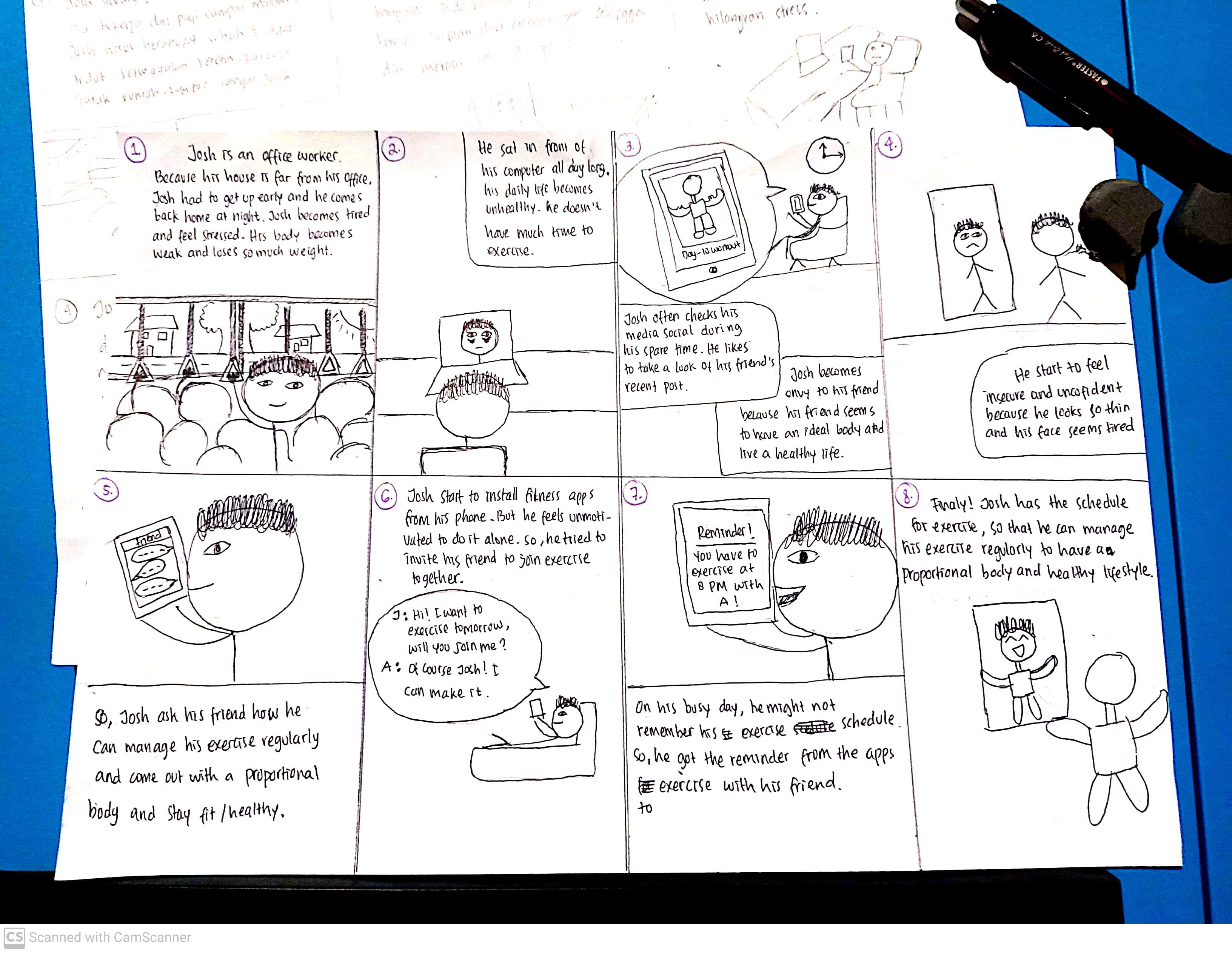
I tried to visualize user's journey or how users would experience a problem or product by drew a storyboards that I would captured it in a series of sketches later.
I map out the elements of the app and connect them as a user flow. User flow aims to make user easily understand the use of Fit Me app. It shows the paths where user can navigate the app and to get to the specific elements. I created a simple flowchart to show the flow.
.png)
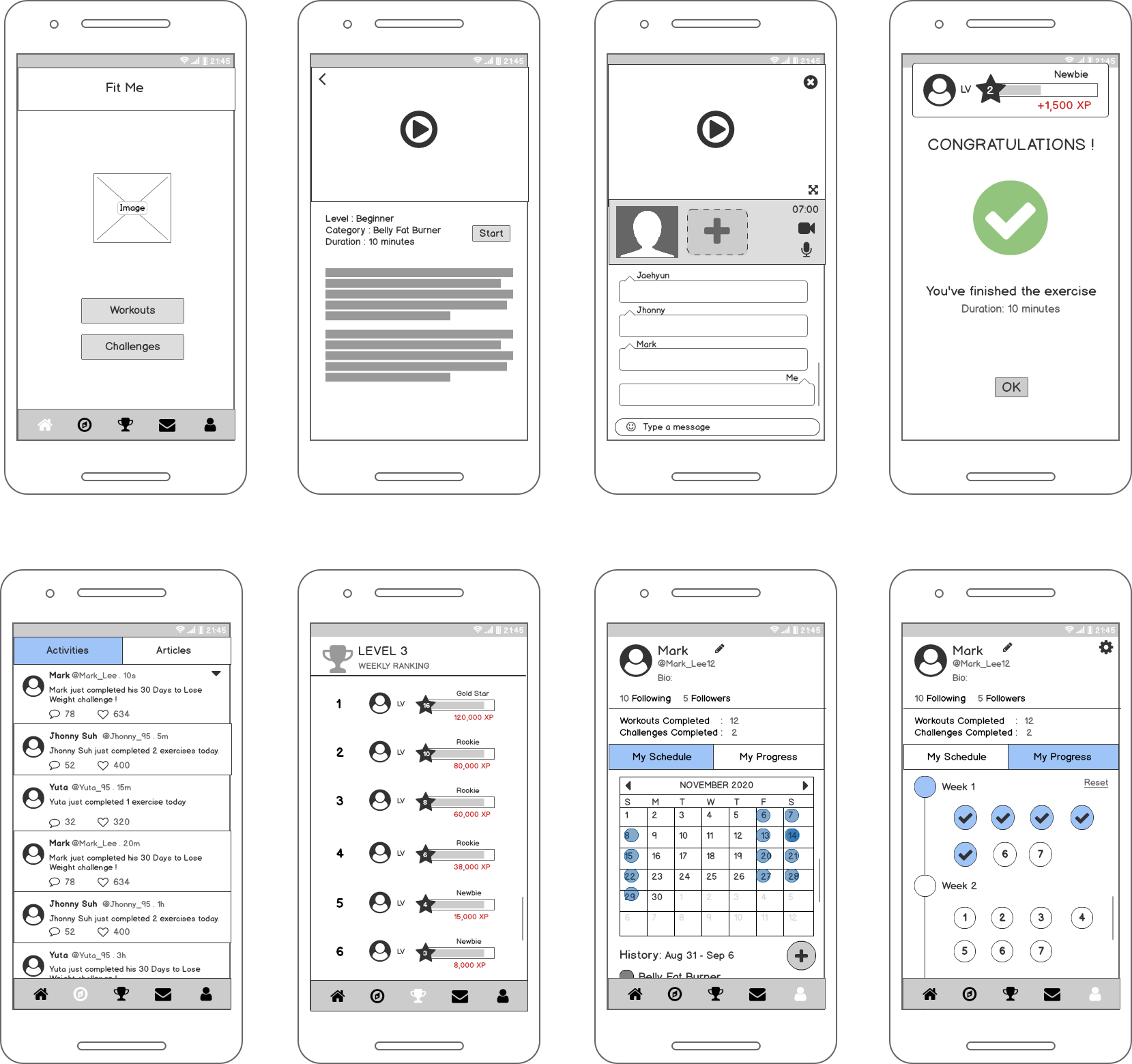
Before I turn the prototype into a final design, I did a usability test to get a quick feedback with 9 participants.
I prepared some tasks for users, so they can operate the application based on the given task. On the first test, 4 users were confused of the challenges menu. They can't find where the challenge menu is.
.png)
So, I decided to separate the workouts and challenges option and move them into Home menu. Besides that, 3 users can not found My Progress menu. I put My Progress menu in the side bar on the Home page. They did not expect that profile icon can be clicked as a side bar.
.png)
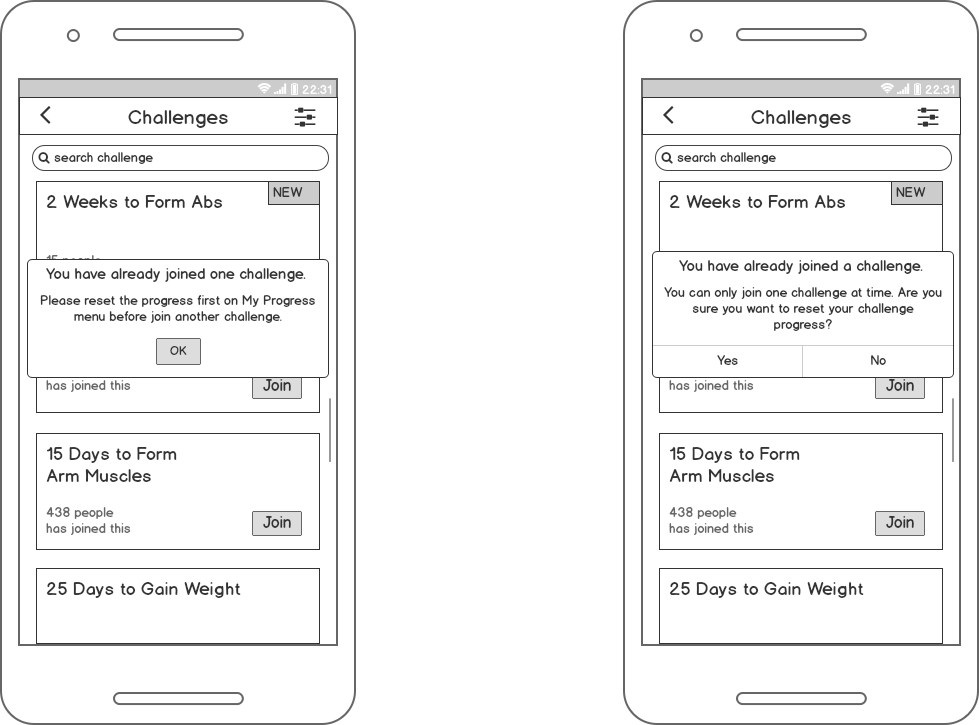
Then, I decided to change the navigation bar into icons and move My Profile menu into it. I also gave the task to user to join the challenge. User only can join challenge once at time. So I made a kind of condition in which user already joined one challenge, and a warning notification will be appeared on screen. It notify the user to reset the progress first, on My Progress menu, before join another challenge. Users found it ineffective because they have to go back to home and then go to My Profile menu.
.gif)
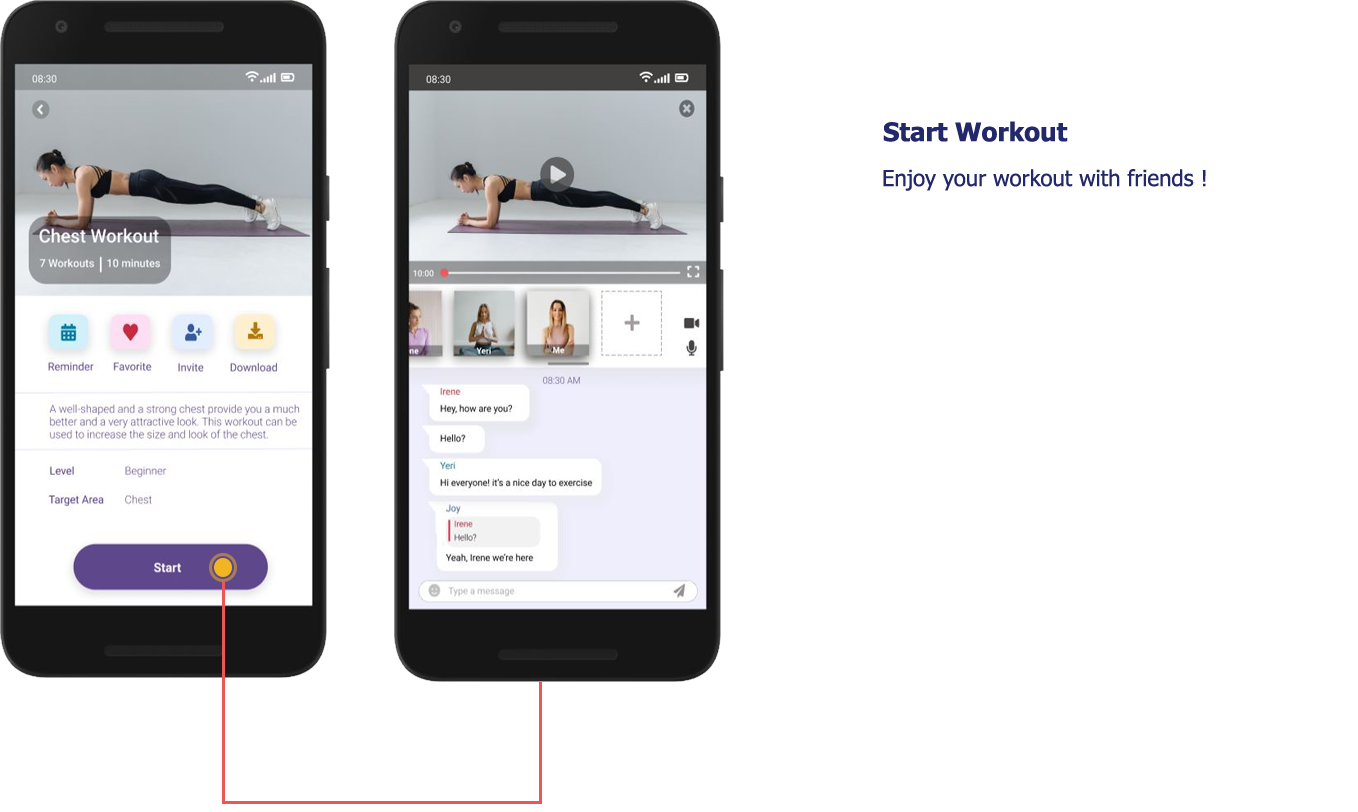
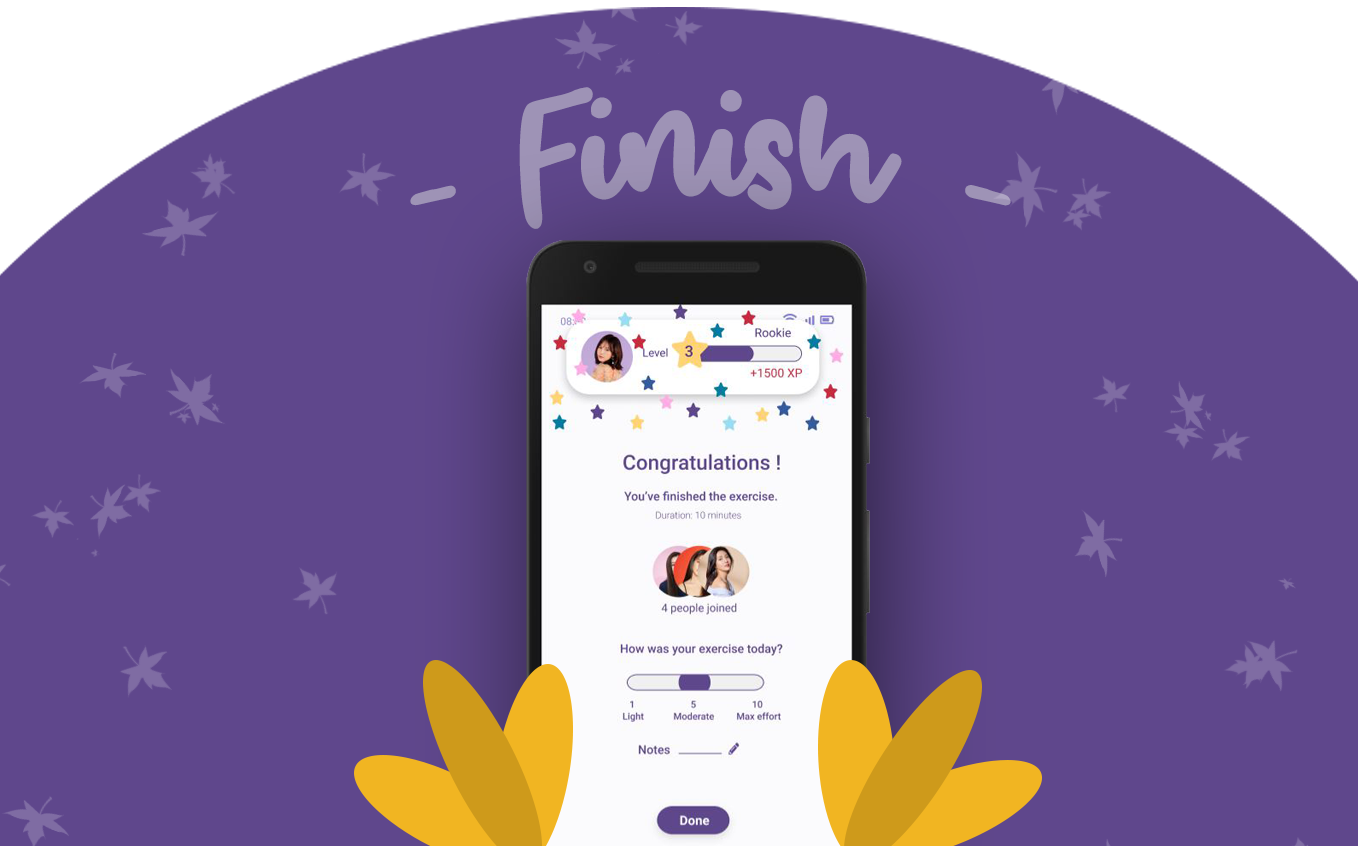
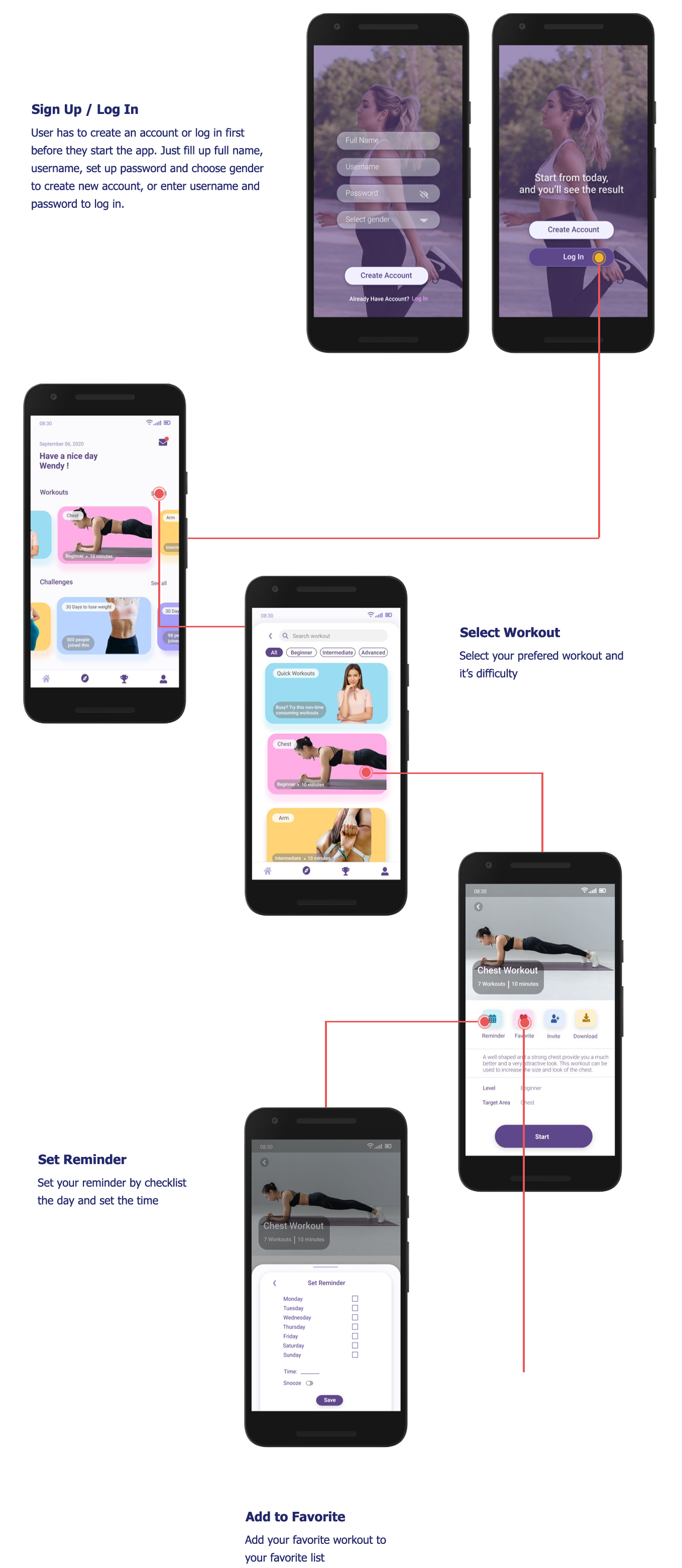
With a home-workout application with video-call feature, user feels like a real exercising with friends. Although users can not look at the phone all the time while they are exercising, but the presence of other people with their voices, will give them more spirit. People's face on a screen also make the user feels like being watched. So that, they will exercise longer than usual.
.gif)
This is my first project of designing a user interface for mobile application. Therefore, I was in doubt and not sure that I can completed this project all by myself. Although I am completely new in UI and UX design, and also I am not skilled yet on several design tools, but I was trying to do it step-by-step. Because I have a strong will to become an UI and UX designer. I trust myself if other people can make it, then I can make it too. I told myself that it is okay to make a mistake, because I am still learning and will always learning to become a better designer.
The first thing that I learned in this course is how to empathize to other people. How to understand people, how they feel and how they interact with something. What I think is good, is not necessarily good to other people too. In this course I have learned how to lay aside my egos and tried to look on the other people insights.
I feel so happy to be a part of this project. Although I am not perfectly skilled yet, I will try my best into a better designer. Finally I can found something that I loved to do. I would like to thank IDF, my participants and all of the people that always supporting me until now :)